
Artist
A virtual painting, sculpture, or exhibition in urban space.
Master class No. 1
A new tool for artists, architects, designers, craftspeople, musicians, photographers, local historians, and other creators — not a technology “for programmers”.
Meet AR as a creative medium, not as a programming stack
Introduce participants to AR and immersive content not as a technology “for programmers”, but as a new tool for artists, architects, designers, craftspeople, musicians, photographers, local historians, and other authors.
The main question
What changes if the real city becomes another stage for publishing creativity?
Six parts — from the idea of immersive content to your own object in the city
AR, VR, 360°, 3D, characters, exhibitions, spatial media, and AI.
A short history of digital publishing — and what you could place in the city.
Examples for artists, architects, craftspeople, musicians, photographers, historians, and businesses.
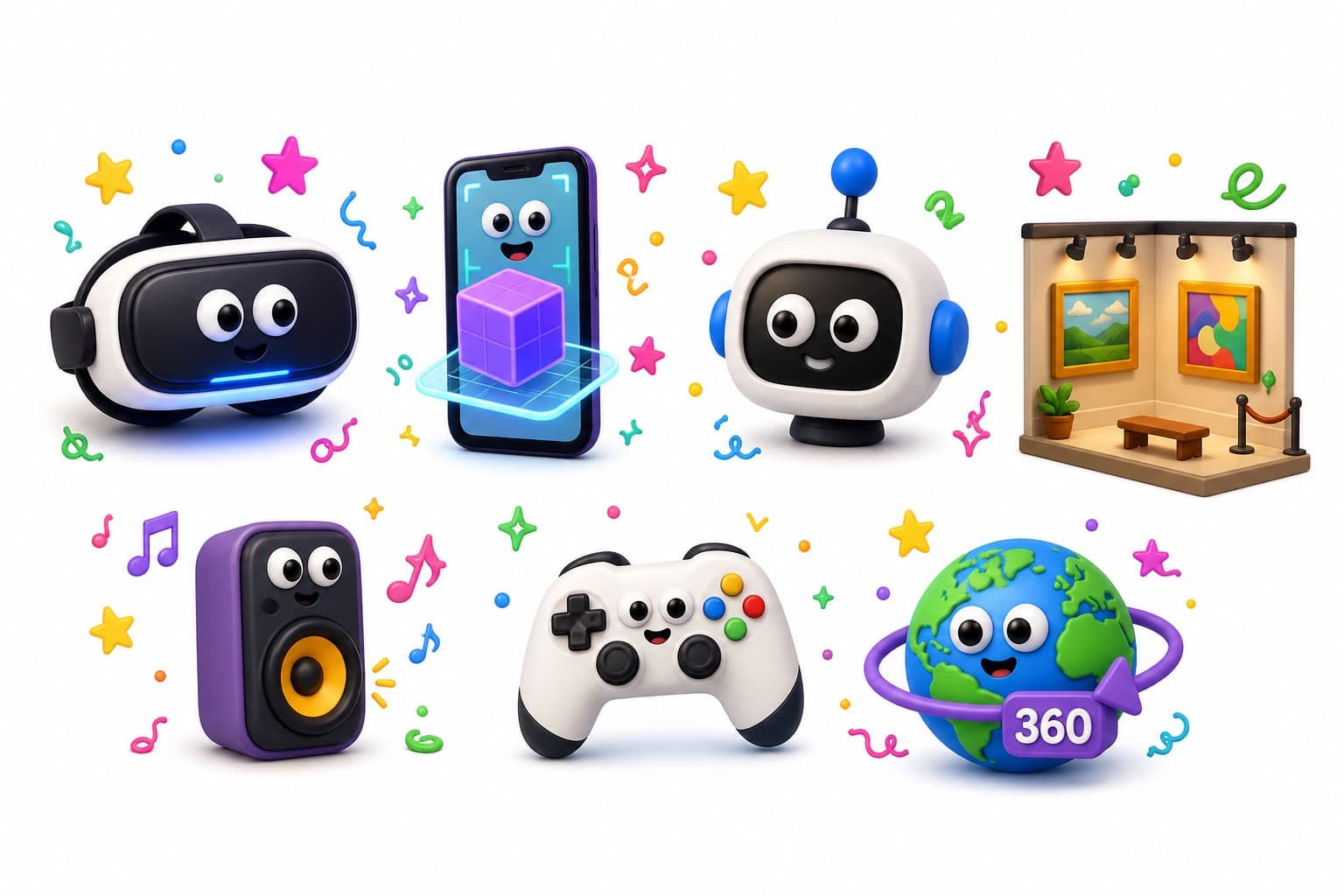
Formats in the browser and in the app: 3D, AR, gallery, 360°, character, Unity.
AR as a service, clients, team projects, portfolios, and grants.
Four questions — no 3D, Unity, or programming required.
10 minutes
In simple words we look at:
We show how this differs from a regular photograph or video.
10 minutes
A short history of digital content. First the internet made it possible to publish text.
Then Instagram made photo publishing mass, YouTube — video, TikTok — short clips.
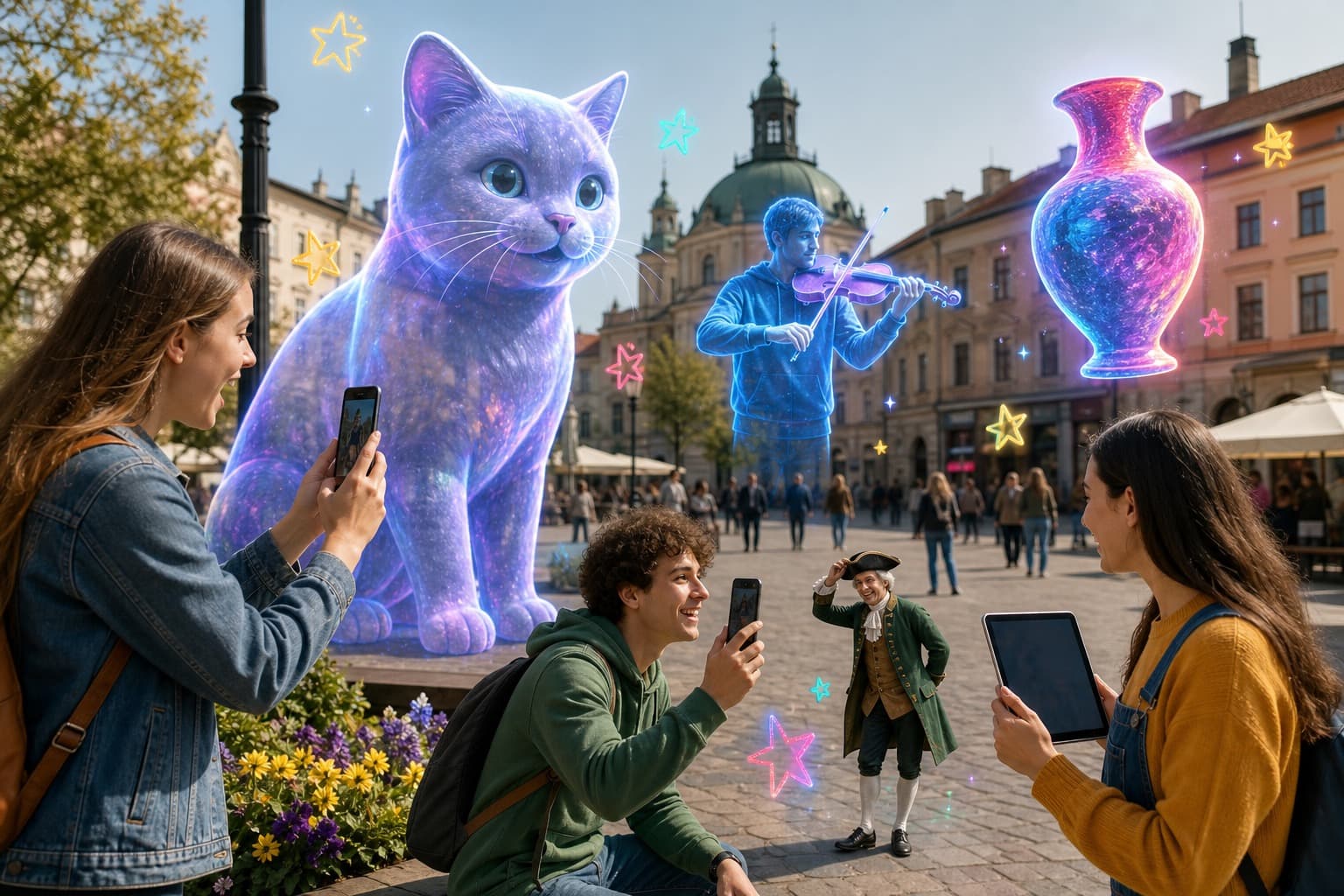
The next interesting stage is content that does not live only on a screen, but is tied to the real space around a person.
15 minutes
Examples for different participants.
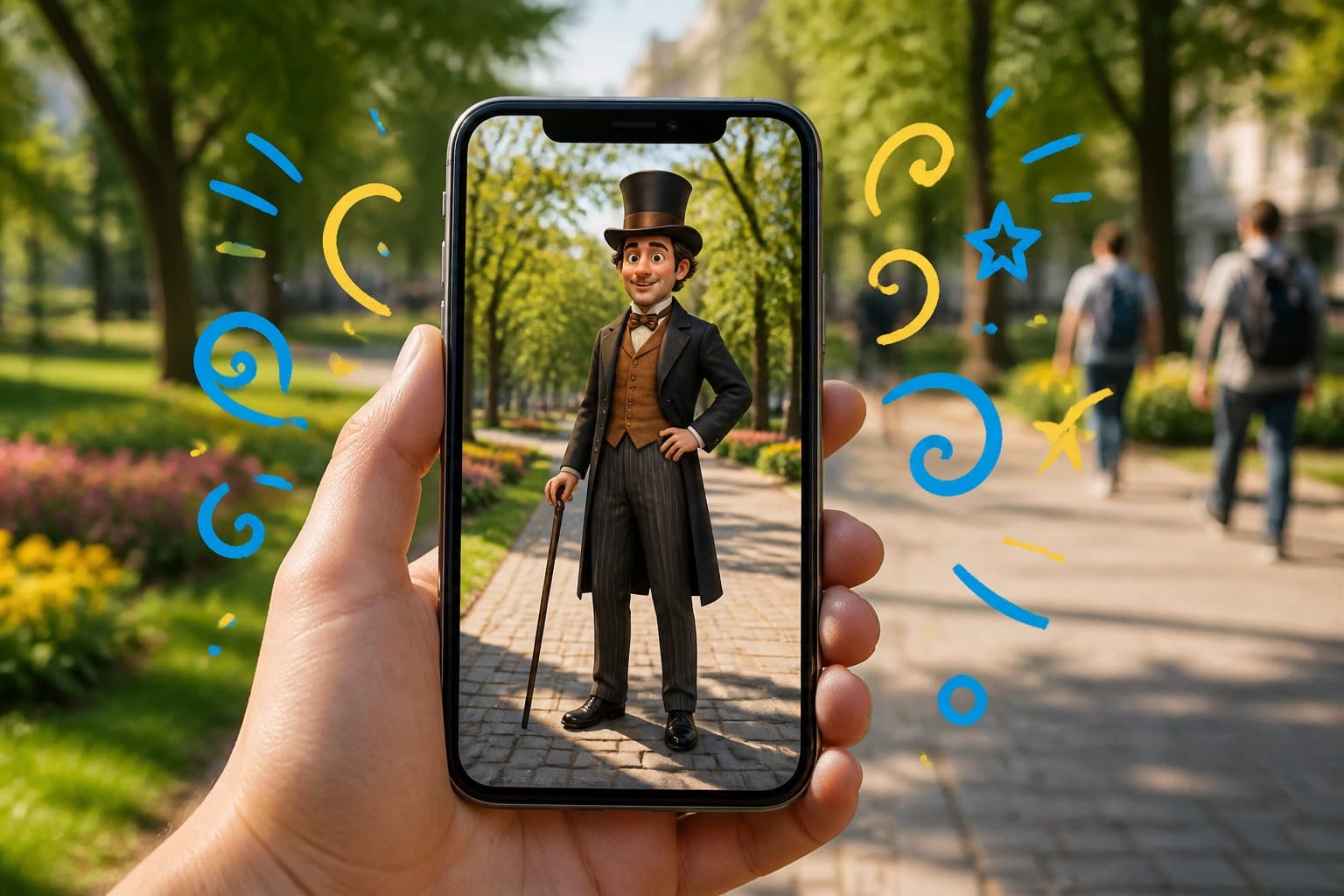
A virtual painting, sculpture, or exhibition in urban space.
Show a lost building, a reconstruction, or your own concept right on site.
Present a piece in 3D and connect it to the maker’s story or a way to order it.
A virtual performance or composition available at a specific point.
A spatial exhibition or a “here now / here 100 years ago” comparison.
Historical characters, buildings, and events.
Interactive shop windows, virtual gifts, spatial design, and special projects.
15 minutes
We show several different formats — and two ways to experience them.
A person gets a link or a QR code and can meet the project immediately.
A full spatial experience with AR, geolocation, and interactivity.
Loading...
10 minutes
We discuss AR not only as art, but also as a new service.
Potential clients can include:
One project can bring several people together: for example an artist, a 3D designer, a historian, a musician, and the technology platform.
We also discuss turning such experiments into a portfolio and using the results when preparing cultural, educational, and grant projects.
15 minutes
Each participant answers four questions:
What do I want to create?
Where should it appear?
What will a person see or hear?
What will they be able to do with the object?
You do not need to know 3D, Unity, or programming.
At the end we choose several ideas to try to realize by the second master class.
Not just knowing what AR is — but leaving with your own idea
The participant leaves not only with knowledge of “what AR is”, but with a personal idea:
“This is what I would like to place in the digital space of the city.”
Available on mobile and desktop

Avento: Spatial Experiences is on Google Play and the App Store.
How to install AventoAvento makes immersive experiences shareable and connected to the real world. Publish and discover AR, 3D, 360° media and AI characters tied to physical locations.