How did people live here?
Avento Education
What if the world around you became the textbook?
See. Ask. Explore. Create.
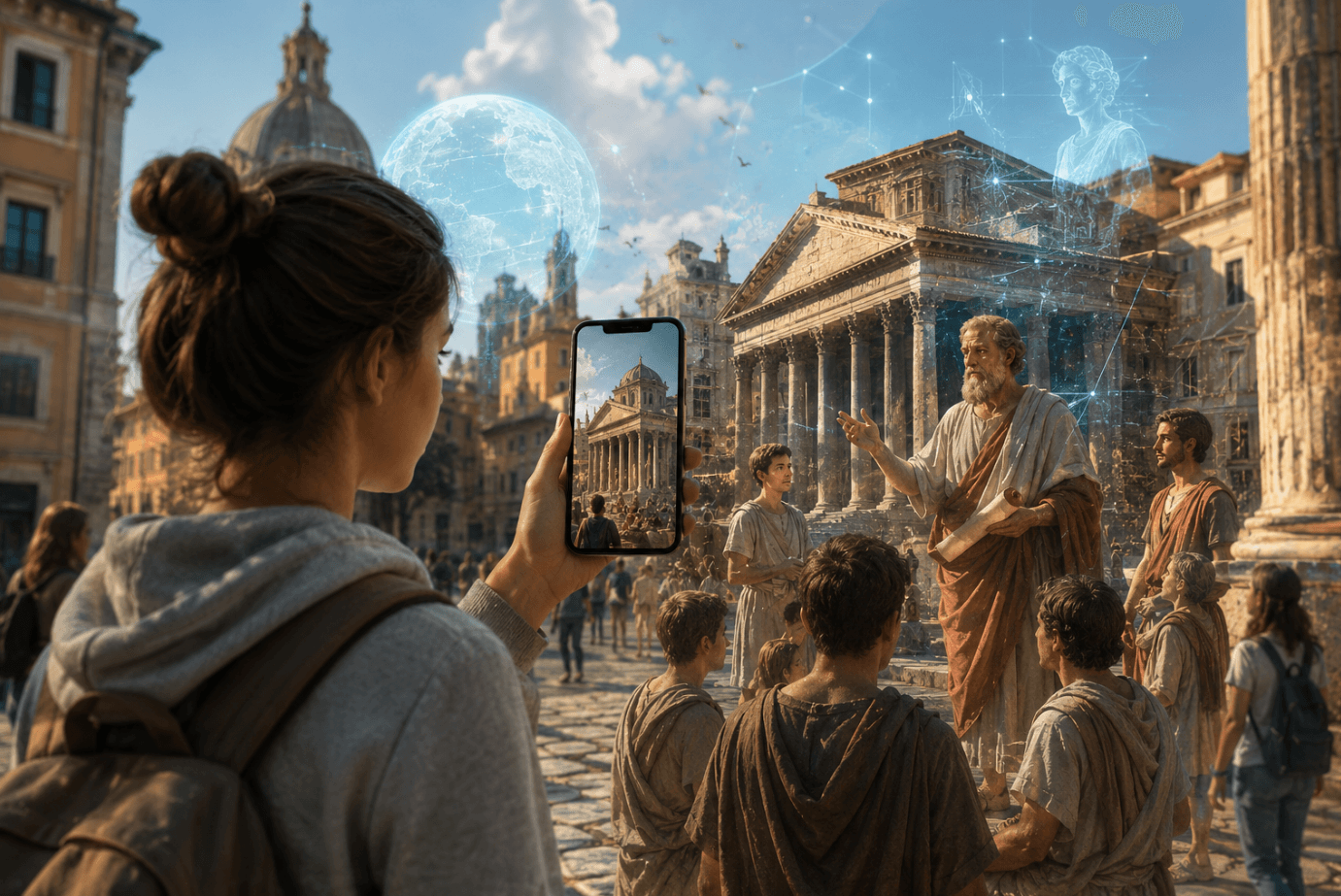
What if the world around you became the textbook?
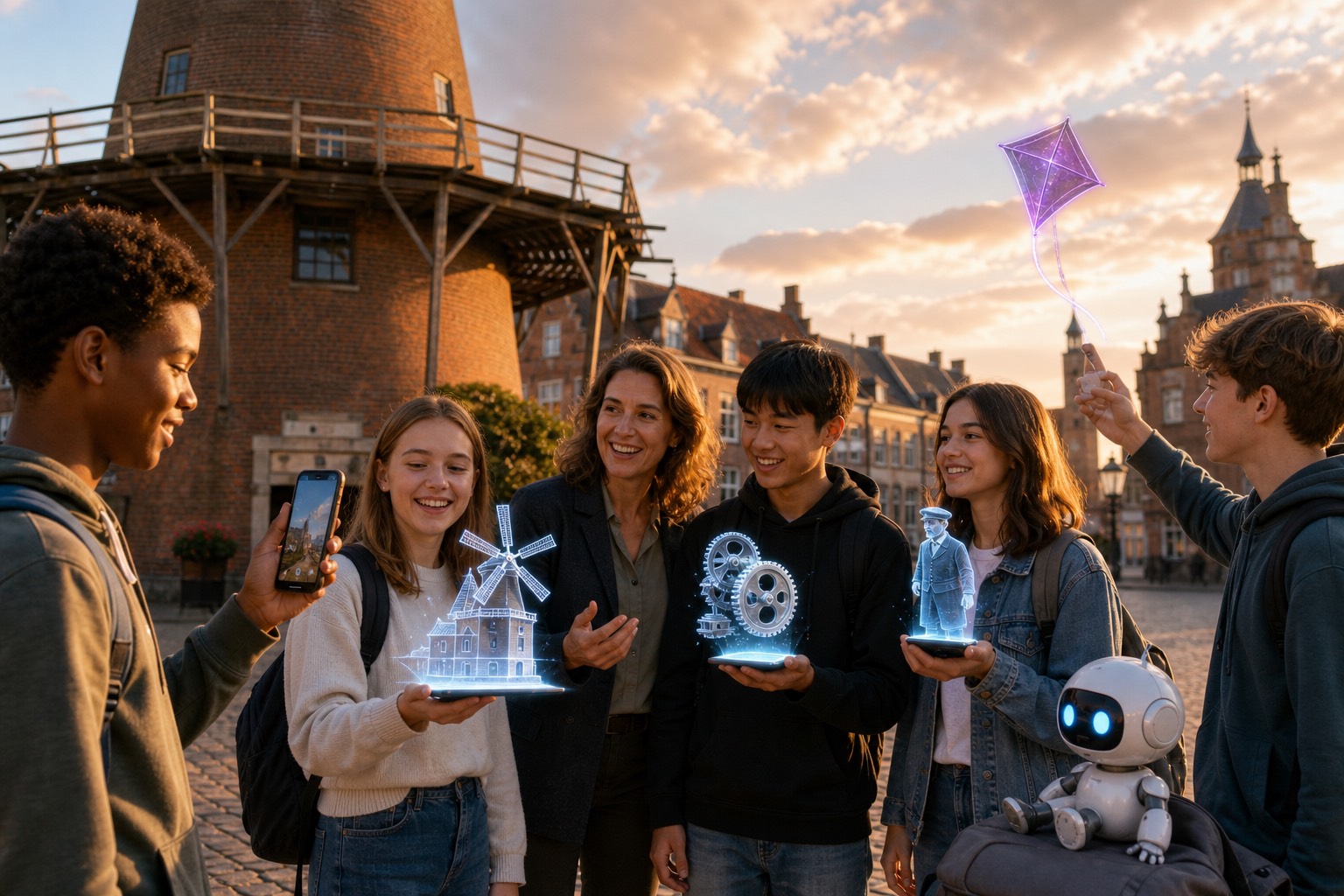
Avento connects real places, AI, augmented reality, and educational content so a learner can do more than read about history, science, or art — they can explore them in the world around them.
See. Ask. Explore. Create.
Six possibilities
From learning at a real place to a constructor for schools, museums, and local historians
- 1
The real world becomes a learning space
Learn where history actually happened
- 2
AR shows what a textbook cannot
Not only read — see and explore
- 3
AI turns a tour into a dialogue
Do not listen to a finished script — ask your own questions
- 4
Personal learning instead of one path for all
Each learner can explore the topic in their own way
- 5
The learner becomes a creator
From watching AR to making a project
- 6
One platform instead of a new app for every project
Modern tools should be available beyond developers
Possibility 1
The real world becomes a learning space
Learn where history actually happened
Most educational content is separated from the real object: a learner reads about a building, an artwork, a historical event, or a technology in a textbook or on a screen.
Avento connects educational material with a physical place.
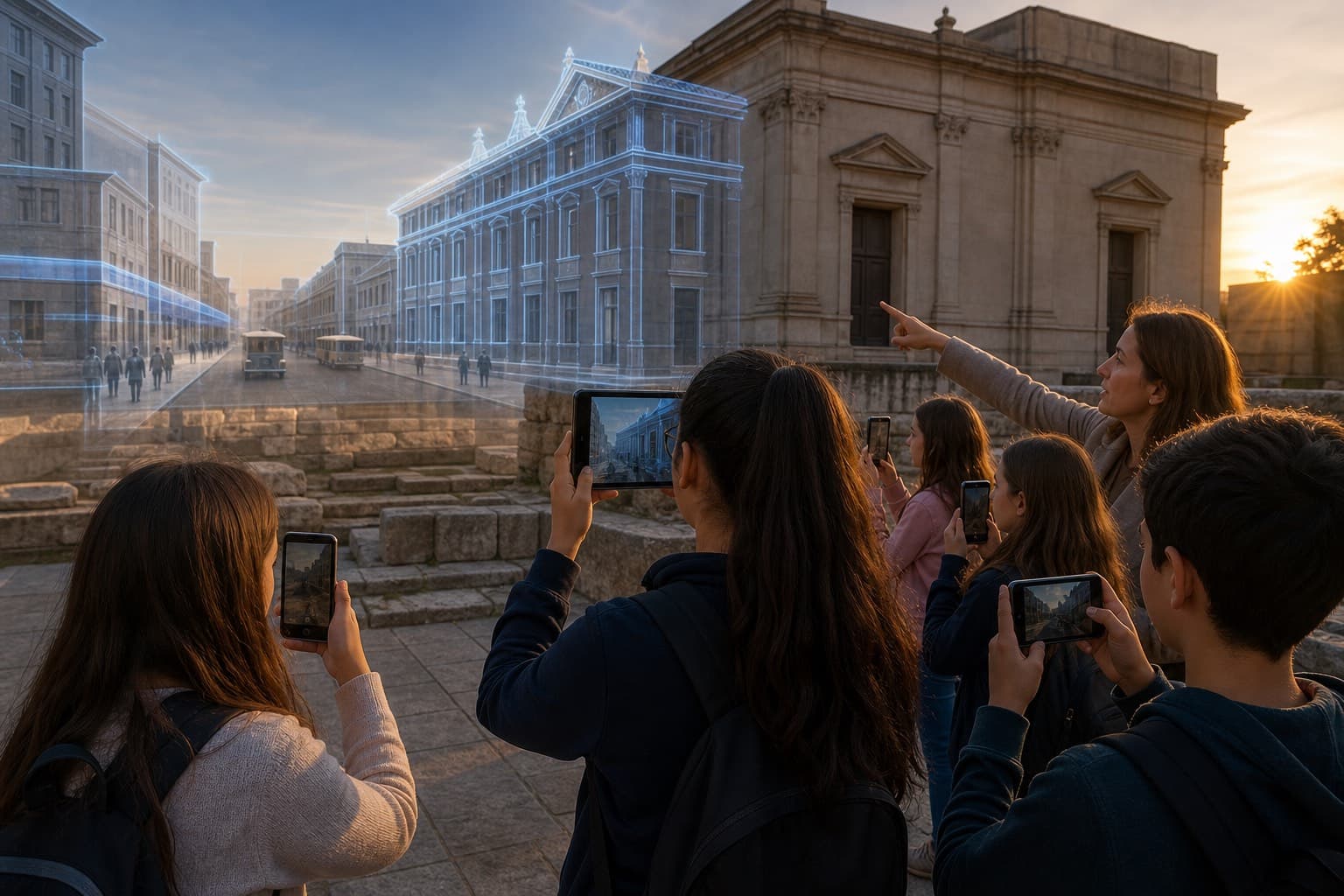
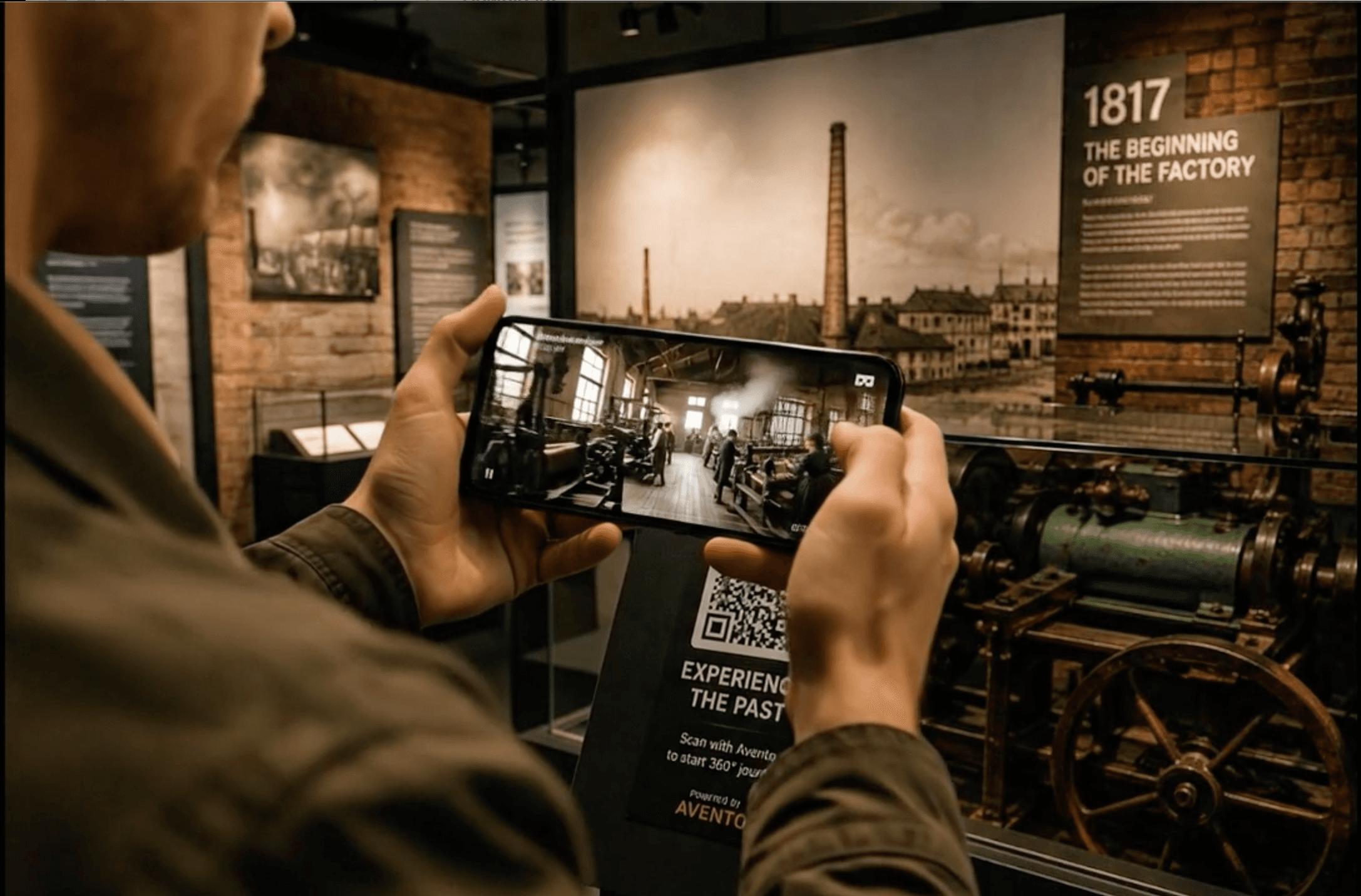
Standing at a historic building, monument, museum, or another site, a learner can open the linked digital scenario: see a reconstruction, study a 3D model, watch materials, or start a conversation with a virtual character.
Research on museum learning shows this approach is promising. A meta-analytic review of 51 studies of AR/VR in museums found that the technologies are used to enrich physical exhibits with digital information, visualize complex processes, and create interactive narrative scenarios.
In a meta-analysis of 17 studies with 1,601 participants, AR/VR showed a positive effect both on educational outcomes (ES = 0.45) and on the perception of the learning experience (ES = 0.59).
- 51 studies
- ES = 0.45
- ES = 0.59
Avento → learning through the context of a real place.
AR/VR in museum learning — meta-analytic reviewPossibility 2
AR shows what a textbook cannot
Not only read — see and explore
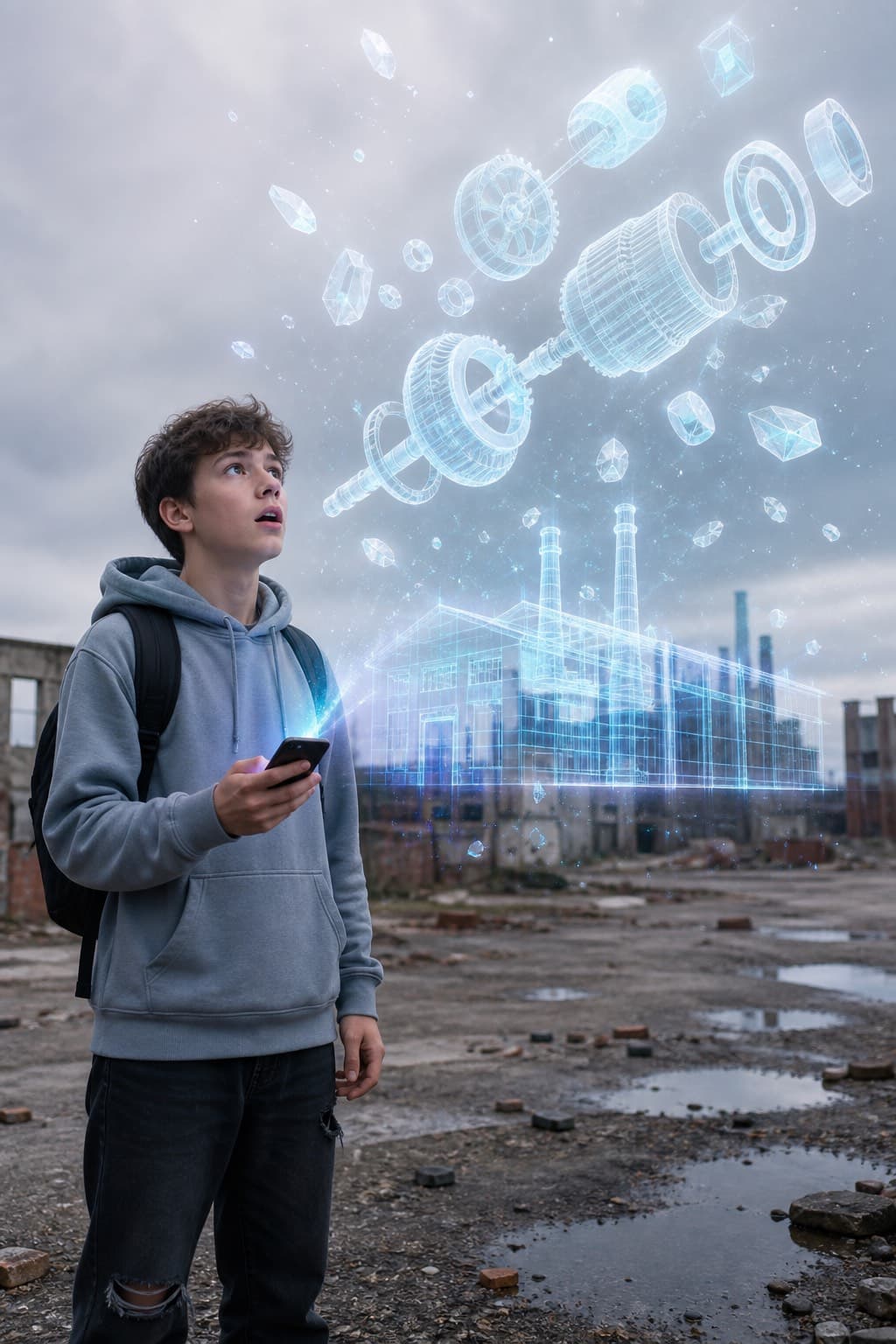
Some knowledge is hard to pass on with text or a photograph alone: how a vanished building looked, how a mechanism worked, how a space changed, or how an object was built from the inside.
Avento lets you place in an educational scenario:
- 3D models
- AR reconstructions
- Historical scenes
- 360° spaces
- Virtual exhibitions
- Spatial video
A large meta-analysis of 134 experimental and quasi-experimental studies of AR in education showed a positive effect on several levels of learning outcomes: learner response, knowledge and skills, and practical performance.
A newer 2025 meta-analysis reviewed 237 publications, and a quantitative analysis of 60 experimental studies showed a large overall positive effect of AR learning — g = 0.896.
- 134 studies
- g = 0.896
Avento → complex and vanished objects can be explored visually and spatially.
Meta-analysis of 134 AR-in-education studiesAR effectiveness meta-analysis, 2025Possibility 3
AI turns a tour into a dialogue
Do not listen to a finished script — ask your own questions
A classic audio guide assumes a linear script: the user hears what the author decided to tell in advance.
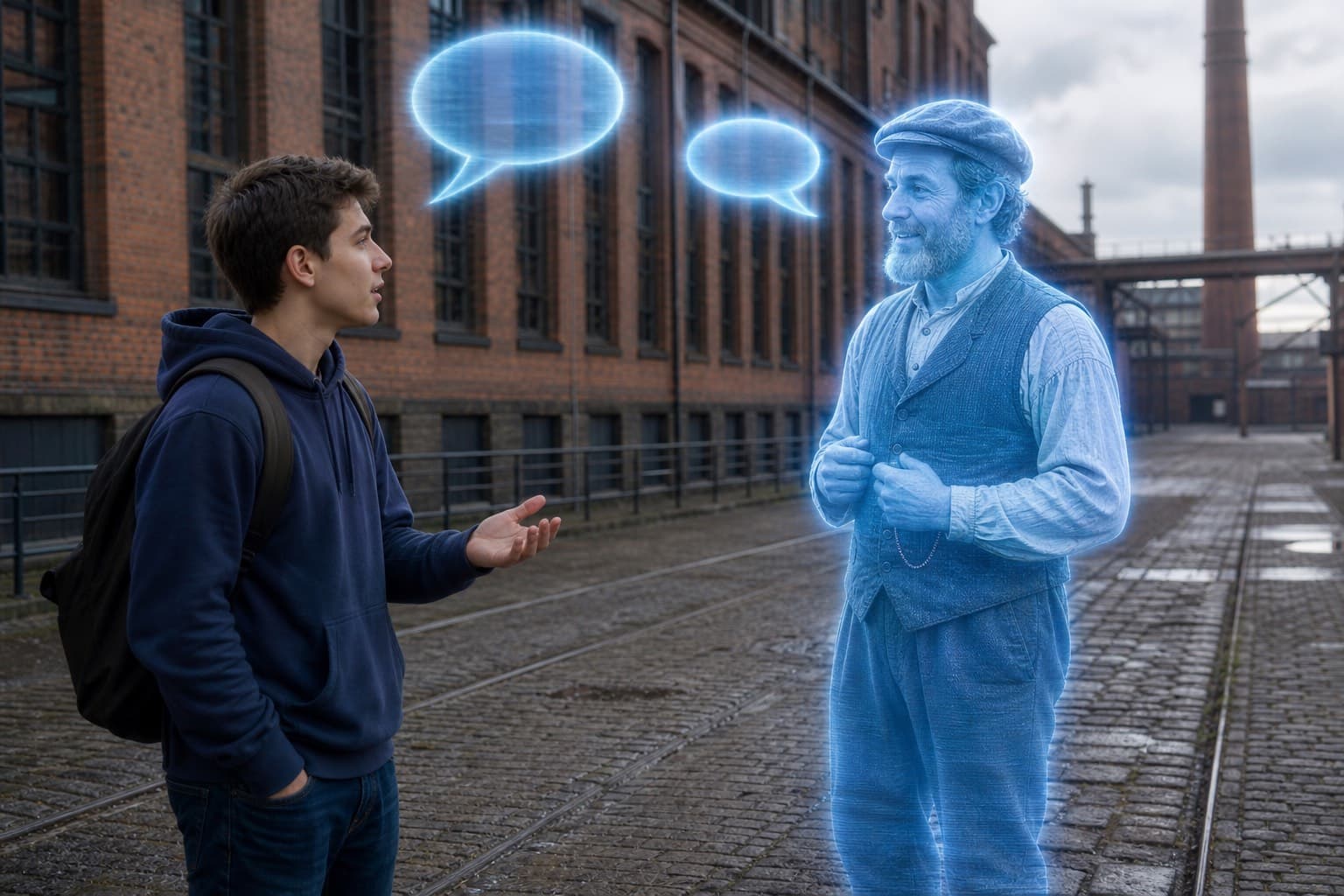
Avento offers another model — exploration through dialogue.
At a historic site a learner can meet a virtual AI character and ask independently:
How did production work?
What was this object used for?
Why was the building placed exactly here?
AI receives the context of the specific location, the educational scenario, and a prepared knowledge base.
UNESCO sees generative AI as a technology with potential for teaching, learning, curriculum design, and research — while stressing a human-centred and pedagogically grounded approach.
expert materials → knowledge base → RAG → AI → learner dialogue
Avento → from a linear audio guide to independent exploration.
UNESCO — Guidance for Generative AI in Education and ResearchPossibility 4
Personal learning instead of one path for all
Each learner can explore the topic in their own way
One student wants to know how a mechanism worked. Another is interested in people’s lives. A third — in the architecture of the building.
Static educational material almost always offers them the same route.
AI lets Avento shape the interaction from the user’s question, current context, place, and educational scenario.
This direction already draws strong interest from teachers. In a UK Department for Education study among 2,536 teachers, about 60% rated the potential of AI and technology for personalised learning positively or very positively.
By November 2024, 50% of surveyed teachers already used generative AI in their professional work. Among those who used it, 73% applied AI when creating learning materials, and 47% when planning lessons and content.
- 2,536 teachers
- 60%
- 73% / 47%
Avento → one educational object can become a starting point for many individual research paths.
Study of generative AI use by educators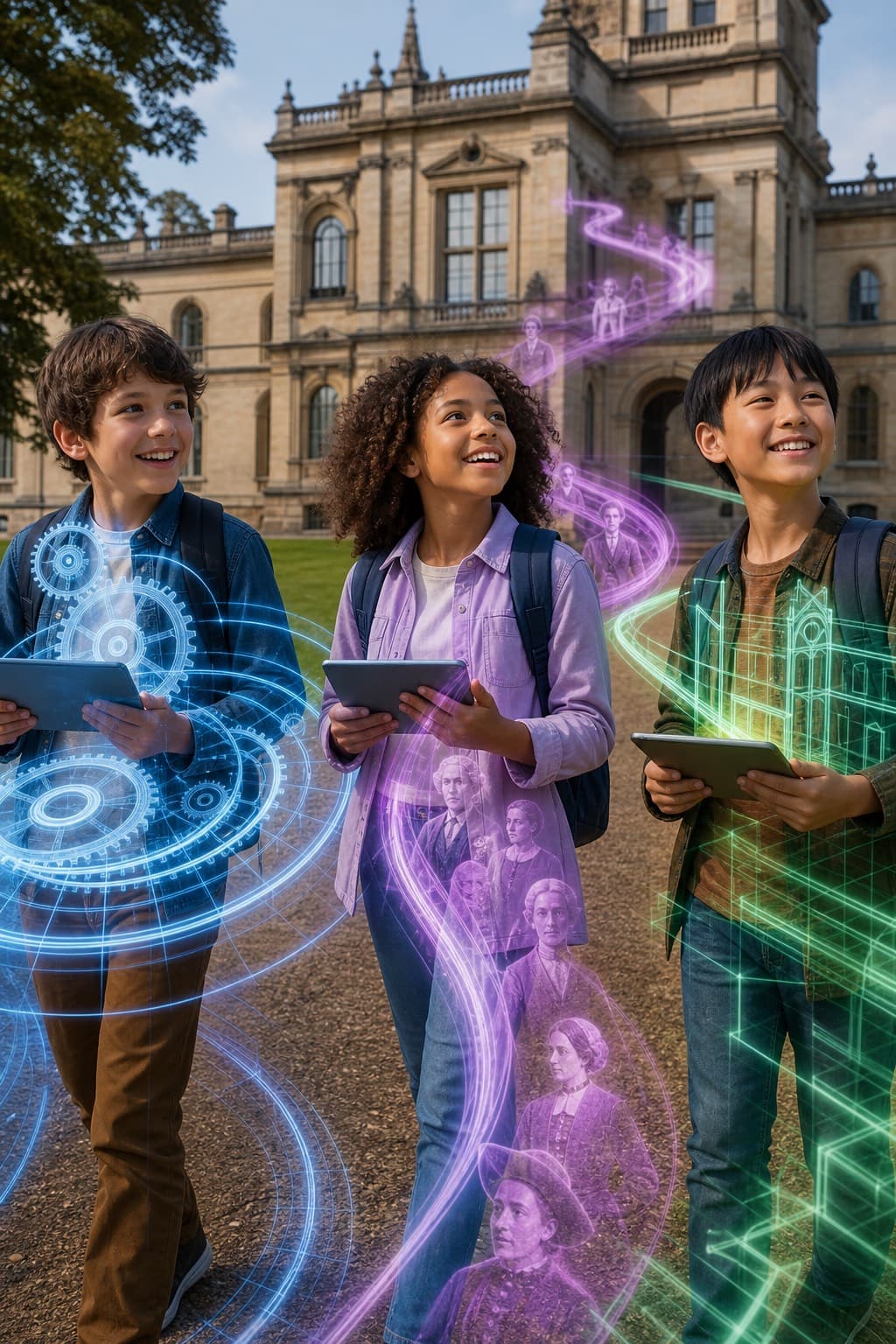
Possibility 5
The learner becomes a creator
From watching AR to making a project
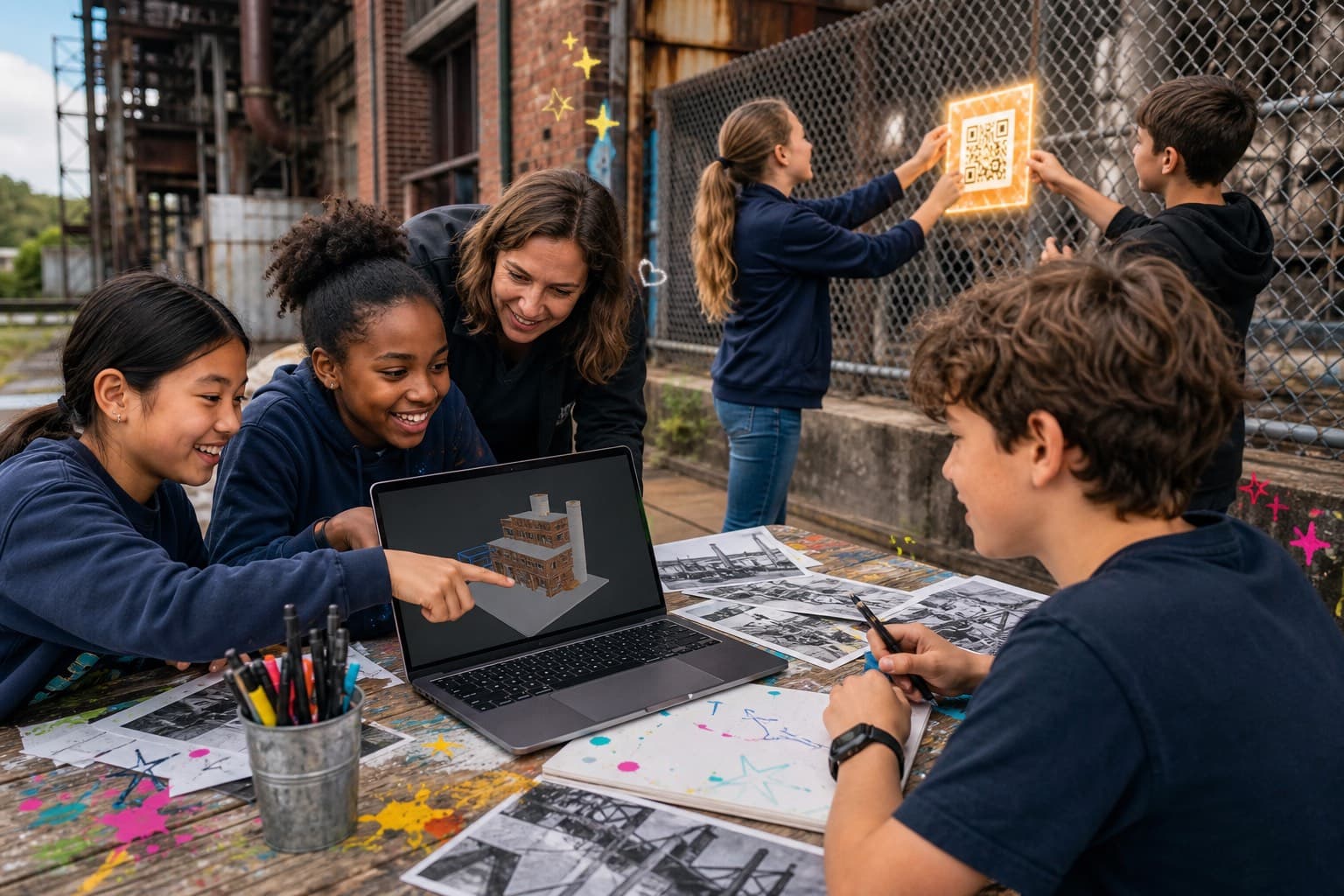
We believe an educational scenario should not be limited to consuming ready-made digital content.
In Avento a learner, teacher, museum, or local historian can walk the full path:
- idea
- research
- source materials
- 3D / AR / video
- AI context
- publish
- QR
- real place
For example, a group of school students can research the history of their district, find archival materials, reconstruct an object in 3D, prepare a knowledge base for an AI character, and place the project next to the historic location.
This way Avento becomes not only a way to present material, but a tool for project-based and inquiry learning.
OECD emphasises that digital tools can raise engagement and support personalisation, yet the educational effect depends on how technology is embedded in the pedagogical process.
That is why our task is not simply to give a learner an AR effect, but to give teachers tools for creating meaningful educational scenarios.
Avento → studied → researched → created → shared.
OECD — the impact of digital technologies on learningPossibility 6
One platform instead of a new app for every project
Modern tools should be available beyond developers
Building a full AI/AR application requires programmers, 3D developers, server infrastructure, mobile development, and ongoing support.
For a single school, museum, teacher, or local-history project this is a serious technology barrier.
That is why Avento is growing as a single educational constructor platform.
An organisation or author can use ready infrastructure and create their own:
- AI guides
- Historical characters
- AR reconstructions
- 3D objects
- Virtual exhibitions
- Learning routes
- Interactive tasks
The teacher remains the author of the educational scenario and the source of expert content.
This is essential: OECD notes that access to technology alone does not guarantee an educational result. Successful digitalisation needs pedagogical, not only technical, solutions — and the teacher keeps a central role.
So our goal is not to replace the teacher with AI. Our goal is to give the teacher new possibilities.
The teacher creates meaning. Avento provides AI/AR tools. The learner explores the real world.
OECD — Preparing Teachers for Digital Education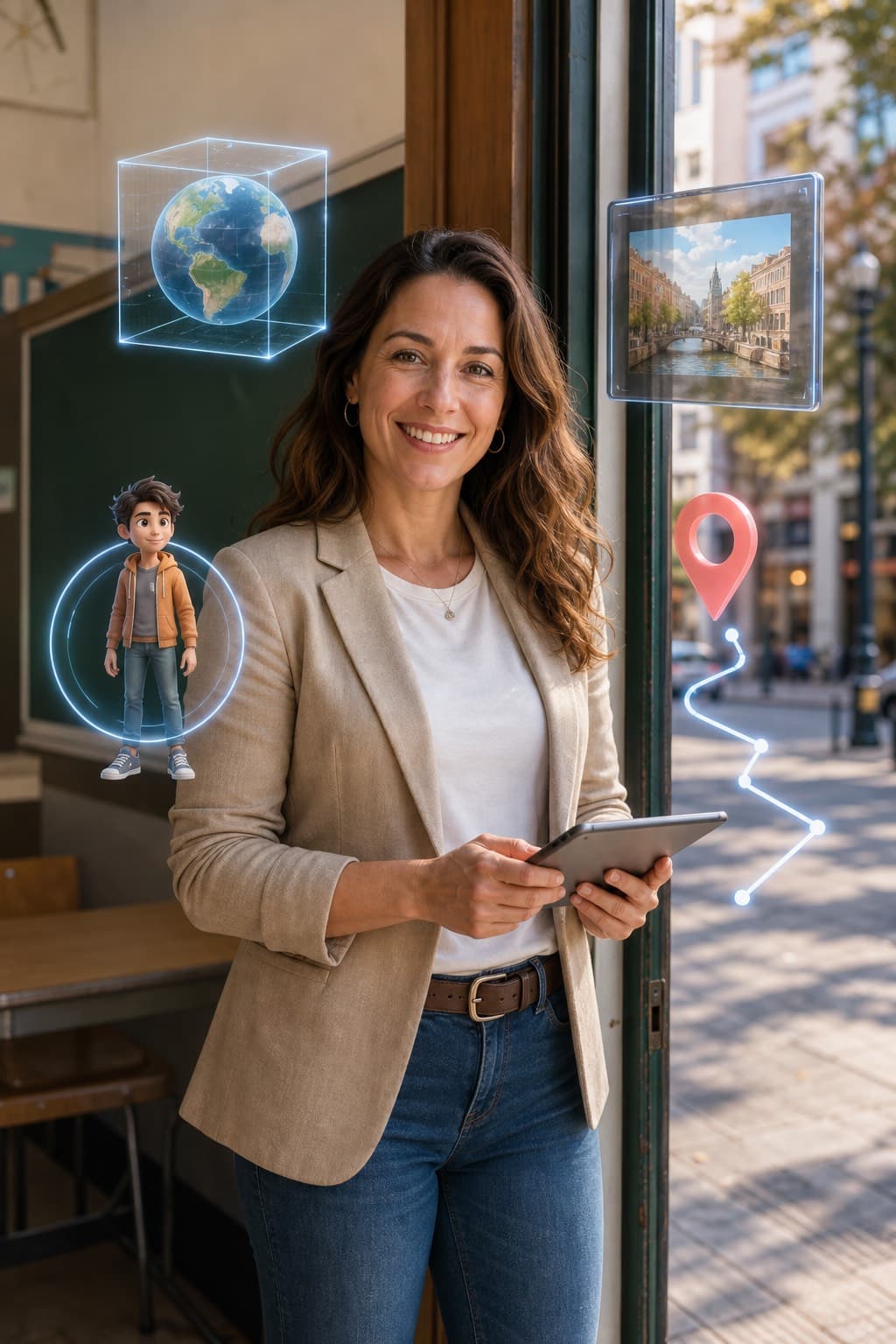
See it in action
Live experiences from the public Avento AR demo — the same formats a school or museum can publish at a real place.
Loading...
Avento AR demo
Open the full public offer page — the same immersive formats a school or museum can publish at a real place.
Open the AR demoAvailable on mobile and desktop


Avento: Spatial Experiences is on Google Play and the App Store.
How to install Avento